

Within the framework of a strategic alliance between SERC Chile, Metlen Energy & Metals, and the Universidad Santo Tomás, they met to project the region's energy development, in order to evaluate real opportunities to advance toward an inclusive and just energy transition.
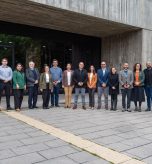
Regional authorities, representatives from academia, companies, energy sector organizations, and communities gathered at the workshop: “Real opportunities for solar energy electrification in the Arica and Parinacota region,” organized by the Solar Energy Research Center (SERC Chile), the Regional Ministerial Secretariat (SEREMI) of Energy of the Arica and Parinacota Region, Metlen Energy & Metals, and the Universidad Santo Tomás, where the event was held.
With the objective of promoting equitable access to sustainable energy solutions and real possibilities for addressing the regional gap in energy technology transition, this event addressed one of the main challenges for our region, considering that vulnerable urban realities and isolated communities coexist within it, requiring innovative alternatives to improve their quality of life, reduce energy costs, and strengthen their resilience against current power system gaps, including cases of electricity dependence as a priority.
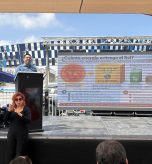
Lorena Cornejo, coordinator of the Science and Society area of SERC Chile and researcher at the Center for Advanced Decentralized Energy Solutions (SEDA), spoke about the opportunities this situation represents for Arica and Parinacota and the importance of forming strategic collaborative alliances for joint work, representing the interest of scientific research centers in contributing to the region's development.
“For thirteen years, SERC Chile has worked to connect science with the concrete challenges of territories. In Arica and Parinacota, through the Ayllu Solar program, a SERC initiative, we have promoted solar solutions co-constructed with urban and rural communities, laying the foundations for solar energy to be a engine for sustainable development with local identity. Likewise, the SEDA national center will be able to contribute with the development of decentralized solar solutions,” commented Cornejo.
Furthermore, she added that the workshop marks a turning point for the future work of the CE-Ayllu Solar center in the region. “Today we begin a new stage at SERC Chile, reaffirming that the north of the country will continue to be a strategic priority; through the recently awarded center (Ayllu Solar Regional Innovation Center: Solar Energy for Productive Development), we seek to continue contributing to sustainable productive development and an energy transition that places people at the center of action.”
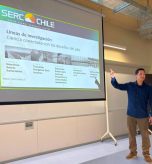
Key topics were addressed during the event, such as the regional energy transition, microgrids and decentralized solutions for isolated communities, and the application of solar energy to productive development, as in the case of agrivoltaic systems. Furthermore, there were collaboration experiences between companies and communities, and experiences from successful programs in the Antofagasta region were shared: the Social Solar House (Casa Solar Social) and My Electric Taxi (Mi Taxi Eléctrico) programs.
An alliance for a solar future
For her part, the academic director of the Universidad Santo Tomás, Grisselle Marín, states that the coordination between stakeholders regarding electrification and solar energy development is crucial, as one of the institution's Outreach and Engagement challenges concerns the environment.
“This type of session contributes to the identification of territorial gaps, the co-construction of proposals, and certainly to connecting capabilities for continuous improvement through linked teaching, applied research, and collaborative networks, with the goal of jointly generating sustainable solutions between the public sector, academia, and local businesses,” reaffirmed the university representative.
In this event, the Regional Ministerial Secretariat (SEREMI) of Science, Technology, Knowledge, and Innovation (CTCi), the regional director of the Superintendency of Electricity and Fuels of Chile (SEC), and the Energy Sustainability Agency, among others, also participated.