

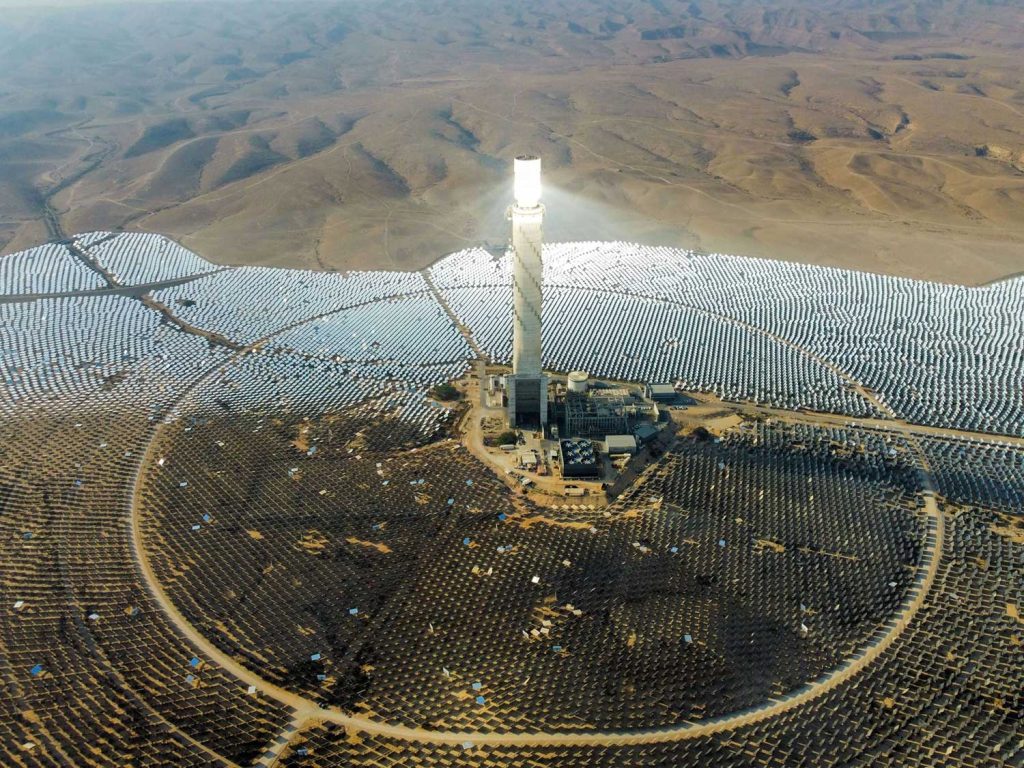
SERC Chile was born in 2012 from a call by the Research Center Financing Fund in Priority Areas (FONDAP) of the National Commission for Scientific and Technological Research CONICYT (now the National Research and Development Agency – ANID), aimed at creating centers of scientific excellence in priority areas for the country's development. The initiative sought to leverage the exceptional solar conditions of northern Chile to boost solar energy research and position this region as a global scientific benchmark.
In response to this challenge, the University of Chile led an alliance comprised of the University of Tarapacá, the University of Antofagasta, the Federico Santa María Technical University, the Adolfo Ibáñez University, the University of Concepción, and Fundación Chile to create the Solar Energy Research Center (SERC Chile).
Installation process
During the 2013-2017 period, SERC Chile addressed the main scientific, technical, and regulatory barriers that limited the development of solar energy in the country through a multidisciplinary approach. Its research focused on the integration of solar energy in mining and industry, power systems with high solar penetration, energy storage, solar water treatment, and economic and regulatory analyses of the sector.
In 2017, the center successfully applied for its continuity, renewing its partner institutions by incorporating the Pontificia Universidad Católica de Chile and Fraunhofer Chile. Following approval by an international committee, CONICYT renewed funding for the 2018-2022 period.
Consolidation and strengthening of trust
This second stage was developed in a context of strong growth in solar energy in Chile, with an installed capacity exceeding 2 GW and a national roadmap to strengthen renewable energies. Given this scenario, SERC Chile redefined its strategic priorities around four main focus areas:
- Massive integration of solar energy into the power system
- Solar-based mining
- Development of small-scale solar solutions
- Optimization and characterization of solar materials and resources under local conditions.
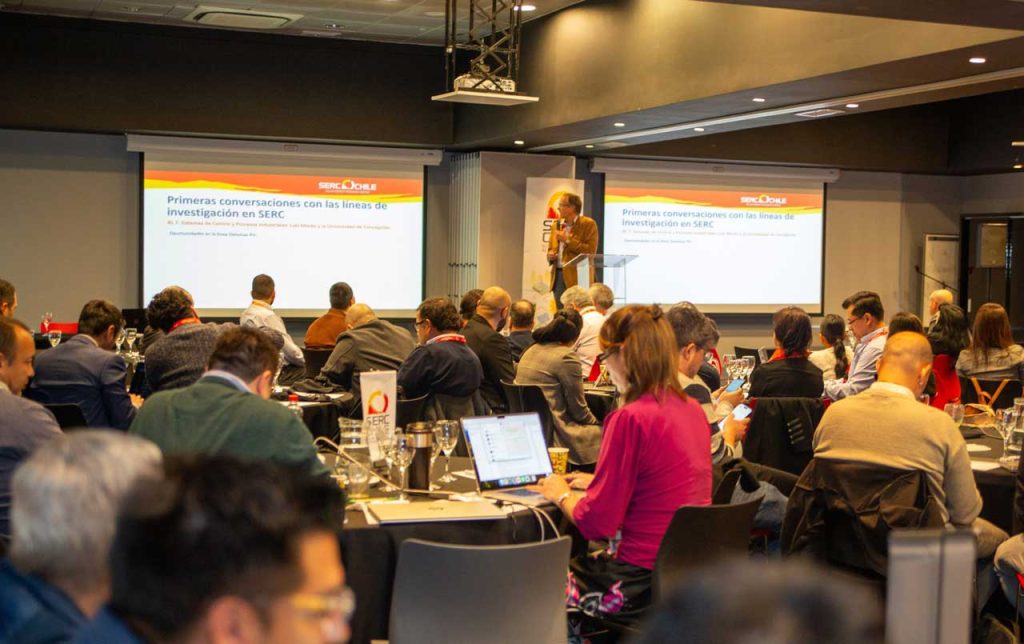
SERC Chile today brings together more than 50 researchers

SERC Chile Researchers
Strengthening the link between science, society, and industry
During the 2024-2025 period, SERC Chile underwent a transition phase through a Bridge funding contest from the ANID's Focused Research Directorate. The center consolidated itself as a national and international benchmark, with high scientific productivity, human capital training, and contributions to public policy. The results in figures, after thirteen years of work, include 1,500 ISI publications, 2,300 students, and 116 researchers among its most outstanding achievements.
Focus on scientific evidence for public policy
SERC Chile is beginning a new cycle for the 2026–2030 period as a Research Center of National Interest. In this new phase, it is projected as a national platform of excellence aimed at strengthening Chile's leadership in solar energy research, development, and innovation, promoting a sustainable and inclusive energy transition with territorial impact.
The leadership of SERC is currently shared by the Pontificia Universidad Católica de Chile and the Universidad de Chile as sponsoring institutions. Likewise, the Universidad de Antofagasta, Universidad Técnica Federico Santa María, Universidad Adolfo Ibáñez, and the Universidad de Concepción participate as associate institutions. The model also includes collaboration with key actors, such as the Ministry of Energy and the Agency for Energy Sustainability. Furthermore, it maintains ties with the productive sector, technological centers, and public bodies, strengthening the relevance and applicability of its research.
At this phase, it incorporates a reinforced emphasis on:
- Engagement with the public and productive sectors
- Knowledge transfer
- Impact on public policy
- Contribution to the country's strategic challenges
Through this inter-university coordination and the institutional commitment of its participating entities, SERC Chile drives the collaborative work of more than 50 researchers, consolidating a scientific and technological ecosystem capable of generating frontier knowledge, contributing to the sustainable development of the country, and positioning Chile as a natural laboratory of global relevance in solar energy.

History SERC Chile
SERC 1
Installation Process (FONDAP-ANID 1).
SERC 2
Consolidation and strengthening of trust (FONDAP-ANID 2).
SERC 3
(ANID Bridge Competition) Strengthening the link between science, society, and industry.
SERC 4
(National Interest Center Competition – ANID) Focus on scientific evidence for public policy.
Solar power
Second stage
Following approval by an international committee, in September 2017, Conicyt ratified the allocation of funds for SERC Chile for another five years (2018-2022).
The challenge, however, is no longer the same.
The second stage of this center finds the country with a different level of solar energy development: there is high penetration, to the point where the installed capacity exceeds 2 GW; furthermore, the Chilean State created a roadmap to incorporate non-conventional renewable energies into the energy matrix, meaning that today it is estimated that solar energy penetration could grow significantly between now and 2030.
The barriers of 2011 are no longer the same and many of them have been overcome. But others exist: for example, storage remains a scientific and technological challenge. And the incorporation of solar energy into productive processes is necessary to make Chile a sustainable country.
Strategic focuses
Following this approach, and maintaining its mission to become a leader in the field, the new SERC Chile will focus on seven research areas: solar water treatment; energy systems; materials science and assessment of solar resources; energy storage; power electronics and energy conversion; sustainable development; and the control of industrial systems and processes.
Working across these seven areas are approximately 80 researchers who, as of January 2018, constitute the extensive team leading SERC Chile's research. They represent eight institutions: the University of Tarapacá (UTA), the University of Antofagasta (UA), the Federico Santa María Technical University (UTFSM), the University of Chile (UCH), the Adolfo Ibáñez University (UAI), the Pontifical Catholic University of Chile (PUC), the University of Concepción (UDEC), and Fraunhofer Chile.
Currently, SERC Chile is undergoing a transition process toward continuity through a project from the National Research and Development Agency (ANID) called "Puente" for two years, 2024 and 2025, where the University of Tarapacá (UTA) withdraws, leaving the remaining institutions to work collaboratively and inclusively with world-leading solar energy research centers to continue the national challenge of transforming Chile into a solar nation.
An Institutional Network with National Reach
We integrate the capabilities of the country's leading universities into an unprecedented collaborative network.