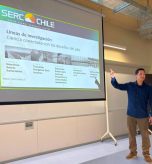



Opinion column by: José Miguel Cardemil, Principal Investigator at SERC Chile
Chile has set an ambitious goal: to achieve carbon neutrality by 2050. Achieving this will not be an easy task. It will involve deeply transforming all of the country's productive sectors, especially industry, which today accounts for a significant fraction of our emissions. In this scenario, solar energy is not just part of the solution: it is a strategic opportunity that we cannot afford to miss.
Over the last decade, we have witnessed an impressive surge in renewable energies, particularly solar photovoltaics. Our country, blessed with some of the highest solar radiation in the world, has installed nearly 11 GW of solar capacity. However, a large part of that energy is lost due to transmission bottlenecks or a lack of system flexibility. Paradoxically, while we curtail clean energy, many industries continue to use fossil fuels to generate heat.
And it is precisely there where solar energy can make a difference.
In Chile, a large part of industrial energy consumption is associated with heat: drying, fluid heating, cooking, smelting. These thermal energy-intensive processes currently depend on diesel, gas, or coal. However, solar thermal technologies exist—such as flat plate collectors, evacuated tubes, or solar concentration systems—that allow this heat to be generated cleanly, efficiently, and competitively. And we are not talking about the future: these solutions are available, proven, and ready to scale.
Furthermore, the transition toward a low-carbon industry is not limited to technological change. It is an opportunity to add value, diversify our exports, open new markets, and generate quality jobs. In key sectors such as mining, food, or construction, incorporating renewable energies into production processes can make the difference between remaining competitive or being left out of markets that demand traceability and increasing environmental standards.
But this transformation will not happen by inertia. We need political resolve, public and private financing, and real coordination between the academic world, the State, and industry. At our center, we work daily to develop applied solutions, train professionals, and validate technologies in real conditions. But we also see how many of these solutions stay on paper due to a lack of will or coordination.
The challenge is technical, yes, but above all, it is political and cultural. Need to change the way we conceive industrial development. Committing to a cleaner energy matrix is not just an environmental requirement: it is a lever for the country's modernization and economic resilience.
Solar energy is there, available, abundant, and clean. It can—and must—be the backbone of industrial decarbonization in Chile. We no longer have excuses. We only lack decision and action.
And at SERC Chile, the solar energy research center, we are ready to contribute.