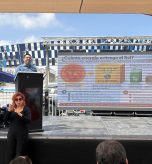


The launch ceremony was held in the Hall of Honor of the National Congress.
The University of Chile, University of Tarapacá, University of Antofagasta, Universidad Técnica Federico Santa María, Universidad Adolfo Ibáñez, and the University of Concepción, together with Fundación Chile, inaugurated the first solar energy research center of excellence in Chile (Solar Energy Research Center, SERC Chile) on July 5, established through CONICYT’s FONDAP program.
The launch ceremony was held in the Hall of Honor of the National Congress in Santiago and was attended by Senator Guido Girardi, president of the Senate’s Future Challenges Commission; Minister of Energy, Jorge Bunster; CONICYT President, José Miguel Aguilera; and SERC Chile Director, Professor Rodrigo Palma.
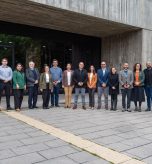
The ceremony was attended by deans, senior university officials, and representatives of the Foundation comprising the center. This entity aims to become a leader in scientific solar energy research, focusing on the potential development of the Atacama Desert. Additionally, more than 200 distinguished guests attended, including government officials, members of Congress, representatives from the academic and scientific communities, and delegates from organizations and companies involved in Chile's solar energy sector.
The project was conceived in recognition of the exceptional solar radiation and visibility conditions of the Chilean Norte Grande, which render it an outstanding natural laboratory. However, both regionally and globally, several barriers still hinder the full realization of this potential—challenges that can be addressed through scientific inquiry. SERC Chile’s mission is to leverage these exceptional conditions to address key scientific questions aimed at overcoming these barriers.
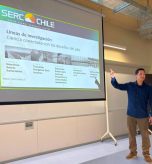
Led by Professor Palma, along with five distinguished senior researchers and 40 national and international researchers, this initiative employs a multidisciplinary approach across six research lines: solar energy in industry/mining; high-power electrical systems with solar energy penetration; solar energy coordination systems for rural and urban communities; solar energy storage; solar water treatment; and economic, social, and regulatory aspects for solar energy development, all of which were detailed during the presentation.
Rodrigo Palma, director of SERC Chile, highlighted the significance of the ceremony for the project team. "The event was widely attended, particularly by decision-makers who can help advance this vision. While we maintain an academic perspective and the outcomes are yet to be determined, all indicators suggest that solar energy development represents a major opportunity for this country that must be seized," he explained.
The center’s Advisory Council is composed of: Dr. Andrés Weintraub Pohorille, winner of the 2000 National Prize for Applied Sciences and member of the Department of Industrial Engineering at the University of Chile; Dr. Alejandro Jadresic, Dean of the Faculty of Engineering and Sciences at UAI and former president of the National Energy Commission; Dr. Alejandro Jofré, director of the Center for Mathematical Modeling at the University of Chile; Dr. Nicola Borregaard, Manager of Energy and Climate Change at Fundación Chile; and María Elena Boisier, director of FONDAP and FONDECYT programs at CONICYT. Additionally, the center maintains an international collaboration network comprising prestigious solar energy research institutions.
Furthermore, during its nomination phase, the project was sponsored by the Ministry of Energy and companies including Enel Green Power, Minera Doña Inés de Collahuasi, Abengoa Chile S.A., and Minera Gaby SpA (now the Gabriela Mistral division of Codelco).
Regarding the various entities comprising the center, Professor Palma explained that SERC Chile will serve a coordinating role, bridging corporate decision-making with practical applications. "In this regard, we aim to provide the evidence and vision necessary for investments in innovation and solar energy," he stated.
Senator Guido Girardi spoke at the launch, asserting that scientific development is society’s primary challenge and that energy models define civilizations. "Chile must cultivate a stronger vision for the future, as it possesses the potential to lead global energy development. Given the irradiation levels in the Atacama Desert, we could potentially supply energy to all of Latin America. Chile can become a leading hub for solar research, and achieving this depends on the collaboration of science, academia, industry, and civil society," he concluded.
SERC Chile aims to generate pioneering scientific research that establishes a robust knowledge base for solar energy; to contribute to human capital development focused on the understanding, application, and promotion of solar energy; and to educate and engage with citizens and policymakers regarding the significance and potential of Chile’s solar resources, positioning the country as a global benchmark for solar energy development.
International Conference
The International Conference "Solar Energy Challenges in Chile and the World" was held at the conclusion of the ceremony in the Hall of Honor, where various international guests discussed implementation strategies for solar energy and the significant potential of the Atacama Desert for effective and sustainable development.
Julián Blanco is the head of Solar Energy Environmental Applications at CIEMAT-Almería. He is an expert in solar desalination processes and technologies for seawater and brackish water and serves as the coordinator of the Joint Program on Solar Energy for the European Energy Research Alliance (EERA).
Peter Strittmatter, director of the Department of Astronomy at the University of Arizona and the Steward Observatory, is a specialist in advanced optics. He is currently spearheading a project on the application of astronomical technologies within the solar energy field.
Radovan Kopecek, Managing Director of Advanced Cell Concepts and member of the Executive Committee at ISC Konstanz, Germany, is one of the center's founders. He has served in both managerial and research capacities since 2007 and currently leads several photovoltaic cell projects in Germany and Europe.
The program concluded with a panel discussion moderated by Professor Rodrigo Palma, featuring Hugh Rudnick, Professor Emeritus at the Pontificia Universidad Católica de Chile, and solar energy expert Roberto Román, who engaged in dialogue with the audience.