

Dr. Cristiane Carvalho, a researcher at SERC Chile and academic at the Universidad de Magallanes, completed an internship at the University of Canterbury, New Zealand, to strengthen scientific cooperation in energy planning and climate change adaptation in both countries.
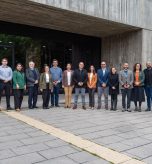
Within the framework of international collaboration between Chile and New Zealand on sustainable energy, SERC Chile researcher and academic from the Universidad de Magallanes (UMAG), Dr. Cristiane Carvalho, completed an internship at the Sustainable Energy Research Group (SERG) at the University of Canterbury (UC), led by Professors Jannik Haas and Rebecca Peer.

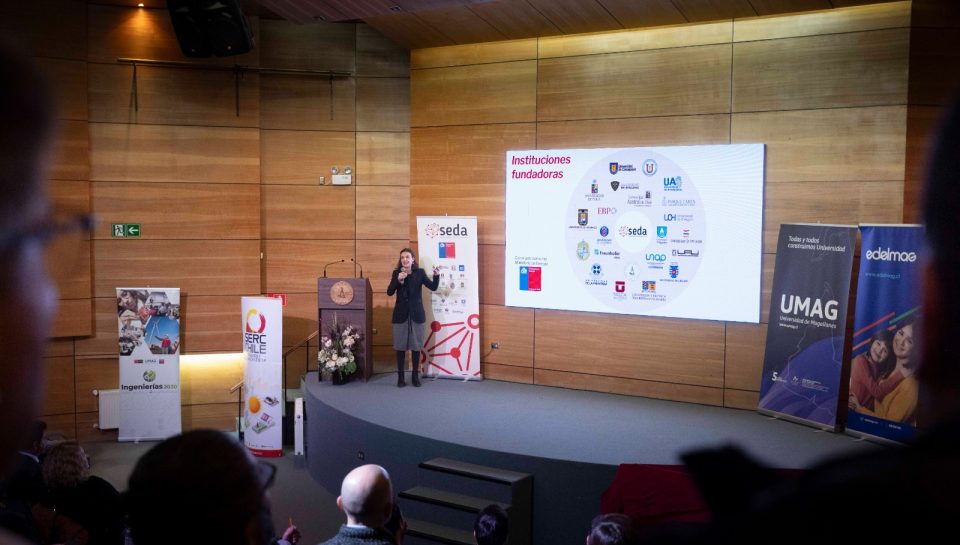
The academic stay, carried out during October 2025, aimed to strengthen scientific cooperation in energy planning, systems modeling, and energy transition scenario evaluation among SERG, SERC Chile, and UMAG. The initiative was funded by the Engineering 2030 project of the Universidad Autónoma de Chile and the Universidad de Magallanes, becoming part of SERC Chile’s international collaboration network.
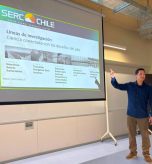
During her internship, Dr. Carvalho gained in-depth knowledge of the energy planning models developed by the SERG group—such as PyPSA, Remix, and Homer—analyzing their applications to the New Zealand context and exploring parallels with the power system of Punta Arenas, an isolated system whose energy planning is the primary focus of her current research project.
“This stay is part of my academic induction project, where I am working on energy planning for the Punta Arenas system. The internship allowed me to learn about the work led by Jannik Haas and Rebecca Peer at the Sustainable Energy Research Group, who develop long-term power system planning and operation models towards 2050, with a view to transforming New Zealand's energy matrix,” explained Dr. Carvalho.
Exchange of experiences

During her stay, the researcher also had the opportunity to interact with doctoral students working on life cycle analysis and technological prospecting, applying energy modeling results to evaluate the environmental and social impact of changes in energy matrices.
“The experience was very valuable for guiding my next six-month internship next year, where I plan to integrate tools such as PyPSA and life cycle analysis into my research. It sought not only to address the techno-economic aspects of the energy transition in Magallanes but also to integrate the social and environmental dimensions that accompany this process,” she added.
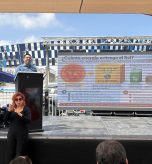
Furthermore, Dr. Carvalho participated in the International Adaptation Futures 2025 Conference, held in Christchurch, where global strategies for resilience and adaptation to climate change were discussed.

“It was an enriching experience. I was able to see how researchers and communities, especially indigenous peoples, are working on climate change adaptation processes. Although it was not an area directly linked to my line of work, it allowed me to delve deeper into resilience issues and catch up on international advances,” the researcher highlighted.

This collaboration reinforces the ties between Chile and New Zealand in energy research and climate adaptation, consolidating SERC Chile's role as a facilitator of knowledge networks and international cooperation.