

Academics from the Solar Energy Research Center (SERC Chile) valued the technical advances presented by the National Electrical Coordinator (CEN) in its 2024 Public Report, as well as the institutional willingness to face critical challenges such as the February 25 blackout. Strengthening operational resilience, incorporating storage, and digitalizing the system were among the points highlighted by the experts.
In its recent 2024 Public Report, the National Electrical Coordinator (CEN) reported significant progress in the transformation of the electrical system, highlighting milestones in the incorporation of renewable energies, the reduction of the emission factor, the integration of technological tools for operation, and various measures aimed at facing contingencies such as the blackout of last February 25.
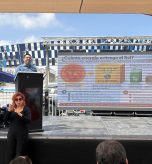
The activity, led by the president of the CEN, Juan Carlos Olmedo, and its executive director, Ernesto Huber, convened authorities from the energy sector, representatives from academia, trade associations, and civil society to review the evolution of the system and the structural challenges facing the country in terms of energy infrastructure and resilience.

In this regard, SERC Chile – UAI researcher and director of the Center for Energy Transition (CENTRA UAI), Rodrigo Barraza, valued the sustained progress toward a cleaner energy matrix, highlighting the 70% renewable share in 2024, which allowed the system's emission factor to be cut nearly in half compared to 2021. However, he warned that this process also brings growing challenges for system security and reliability.
“The February 25 blackout evidenced relevant vulnerabilities, especially the early disconnection of renewable generation, which accentuated the system imbalance. This event reinforces the urgency of advancing measures that strengthen the power system's resilience,” Barraza pointed out.
Strategic focuses
Among the strategic focuses mentioned by Barraza, the timely updating of Technical Standards, the accelerated incorporation of storage technologies, and the development of capabilities for the system to operate autonomously in subsystems during contingencies stand out.
“In a country like Chile, highly exposed to extreme events, energy resilience must be conceived as a strategic investment that combines operational flexibility, robust infrastructure, and effective coordination among all system actors. Strengthening this capacity will not only allow future contingencies to be faced more solidly but also ensure a secure, sustainable energy transition focused on people's well-being,” Barraza added.
In this same vein, SERC Chile – UAI researcher Carlos Silva emphasized that the CEN’s annual report reflects the state of the art in system operation and a clear will for continuous improvement. Furthermore, he highlighted milestones in digitalization, open access, and the integration of clean technologies.
“The organization quantified the work done regarding open access for new generation and transmission projects, storage integration, and solar and wind energy contributions to the system. Regarding the latter point, the contribution of renewable technologies in energy terms and their growing participation in the provision of Ancillary Services (SSCC) was highlighted,” Silva clarified.
In turn, Silva added that the report also made reference to various technological tools that the CEN is integrating into the system operation to allow the coordination of a growing number of generation units in a safe and efficient manner.
For the researchers, the Public Report presented key data: a 20% decrease in emissions per MWh generated, growth in the share of solar and wind energy, and a decrease of nearly 1 billion dollars in system operation costs.
The experts conclude that while the CEN has taken firm steps in digitalization, renewable integration, and operational coordination, it will be key to maintain solid technical governance and ensure regulatory compliance at all levels to consolidate a secure and sustainable energy transition.
Photos: National Electrical Coordinator (CEN)