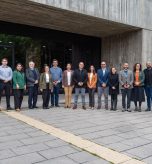


The 1st Meeting of CONICYT Research Centers was held at the Manquehue Hotel in Santiago on September 29 and 30. Representatives from various regional centers participated in the event, as well as from the Associative Research Program (PIA) and FONDAP (Research Center Financing Fund for Priority Areas), including SERC Chile.
In both sessions, delegates from each research center discussed their experiences, work methodologies, and organizational challenges before an audience that included CONICYT authorities.
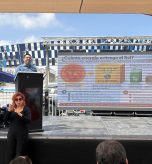
The conference by Rodrigo Palma, director of SERC Chile, took place on the second day during the second thematic block, “The Contribution of Research Centers to Public Policies.” The session was introduced by María José Menéndez, director of CONICYT’s Department of Studies and Strategic Management, who invited all scientists to explore diverse fields to achieve a significant milestone for society.
“Research centers are called to make an impact not only in science, but also in other areas such as health, the environment, culture, and education, among others, so that the impact on development can be clearly visualized,” stated Menéndez.
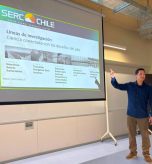
During his presentation, Rodrigo Palma emphasized the importance of Public Policies for the country’s energy development and highlighted the various partnerships the center has established on several occasions, such as the participation of five SERC researchers in the Advisory Council created by the Ministry of Energy and consultancies for Congressional commissions.
“SERC’s mission is to engage with real-world challenges and not focus solely on scientific domains. Twenty years from now, Chile can become a leading exporter of solar energy and other non-conventional energy in South America. Our ‘moonshot’ dream is to have 12 plots of land in the north of the country generating 4,800 KW. However, we must inspire the nation and establish associated public policies; otherwise, this will be impossible,” he added.
Download Rodrigo Palma’s presentation here.