

With an emphasis on scientific collaboration and innovation applied to the territory, SERC Chile highlighted the strategic role of Magallanes as a key region for advancing sustainable, resilient, and nationally replicable energy models.
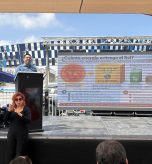
The seminar “Challenges of the Energy Transition in Magallanes” was held in the Ernesto Livacic auditorium at the Universidad de Magallanes, an event that marked the official launch of the Center for Advanced Decentralized Energy Solutions (SEDA), with the goal of promoting energy solutions adapted to local realities and advancing toward a cleaner and more resilient matrix.

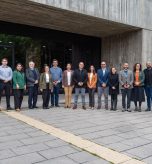
The event brought together representatives from the academic, institutional, and business sectors, all with a common interest: positioning Magallanes as a pioneer territory in a just, sustainable, and decentralized energy transition. Within this framework, the director of SERC Chile, Rodrigo Palma, underscored the strategic role of the region in the national decarbonization process.
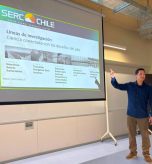
During his presentation, Rodrigo Palma indicated that “Chile has the possibility of offering the world a contribution to sustainability while protecting itself. We could supply up to 8% of global electricity consumption, but without repeating the history of sacrificing our territory for the benefit of others.”
During his presentation, the academic emphasized that the energy future of Magallanes should not be limited to green hydrogen, but rather consider a diversity of clean sources and decentralized strategies. In this context, he highlighted the region's potential to lead new forms of energy autonomy at a local scale, linked to both its natural resources and territorial needs.
“The vocation for energy self-sufficiency is in Magallanes' DNA. Today, that vocation can be renewed with wind, sun, and biomass. But with one difference: this time, we can do it while protecting the territory and generating local well-being.” Furthermore, he added that “aquatic electromobility in the fjords could take off from Magallanes. Ferries, artisanal fishing, coastal transport: all of that could be electrified here first, not in Santiago.”
During the seminar, key aspects of local energy development were addressed, such as the legislative work that the SEDA Center has led alongside the Ministry of Energy to propose amendments to the regulatory frameworks for medium-sized and isolated systems. Academic Cristiane Carvalho, from the UMAG Faculty of Engineering, presented the progress made in this area, while the Magallanes Seremi of Energy, Sergio Cuitiño, highlighted the impact of this work, which is currently being discussed in the Chamber of Deputies.

The seminar concluded with a call to deepen territorial dialogue and inter-institutional cooperation to advance toward a sustainable and equitable energy model.
Watch the seminar here: https://www.youtube.com/watch?v=TP43_UgiWOw